



There is a moment, in every wedding,
that remains invisible.
It does not belong to the day,
nor to the ceremony,
nor to the dress.
It happens before —
long before —
when the guest list is decided.
The list of guests is one of the quietest
and most revealing gestures of a wedding.
Not because it defines the event,
but because it determines its meaning.
In recent years,
weddings have gradually become something larger.
More structured.
More extended.
More visible.
Guest lists grow longer.
Tables multiply.
Presence begins to feel like a measure.
As if the value of a wedding
could be quantified.
And yet,
what truly happens in a wedding
has nothing to do with numbers.
It has to do with the quality of presence.
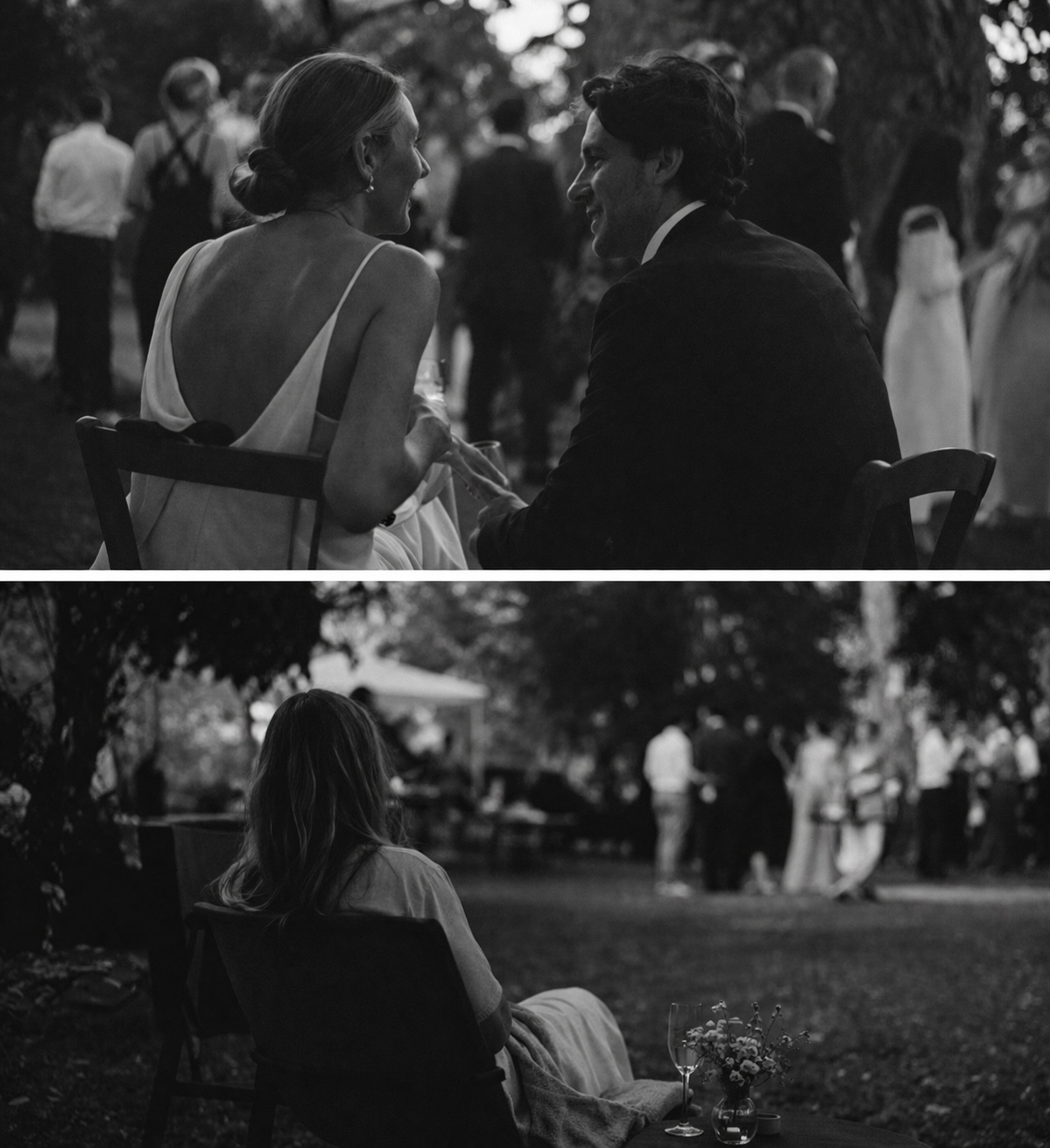
Not everyone occupies the same space.
There is a subtle but decisive difference
between those who watch
and those who know.
Between those who attend
and those who take part.
Between those who are there because they were invited
and those who are there because they are necessary.
It is a difference that cannot be seen,
but is immediately felt.
When this distinction disappears,
the nature of the wedding changes.
It becomes something to be observed
rather than shared.
An event that happens in front of others,
instead of with them.
A ritual, instead, requires something else.
It requires presence.
It requires recognition.
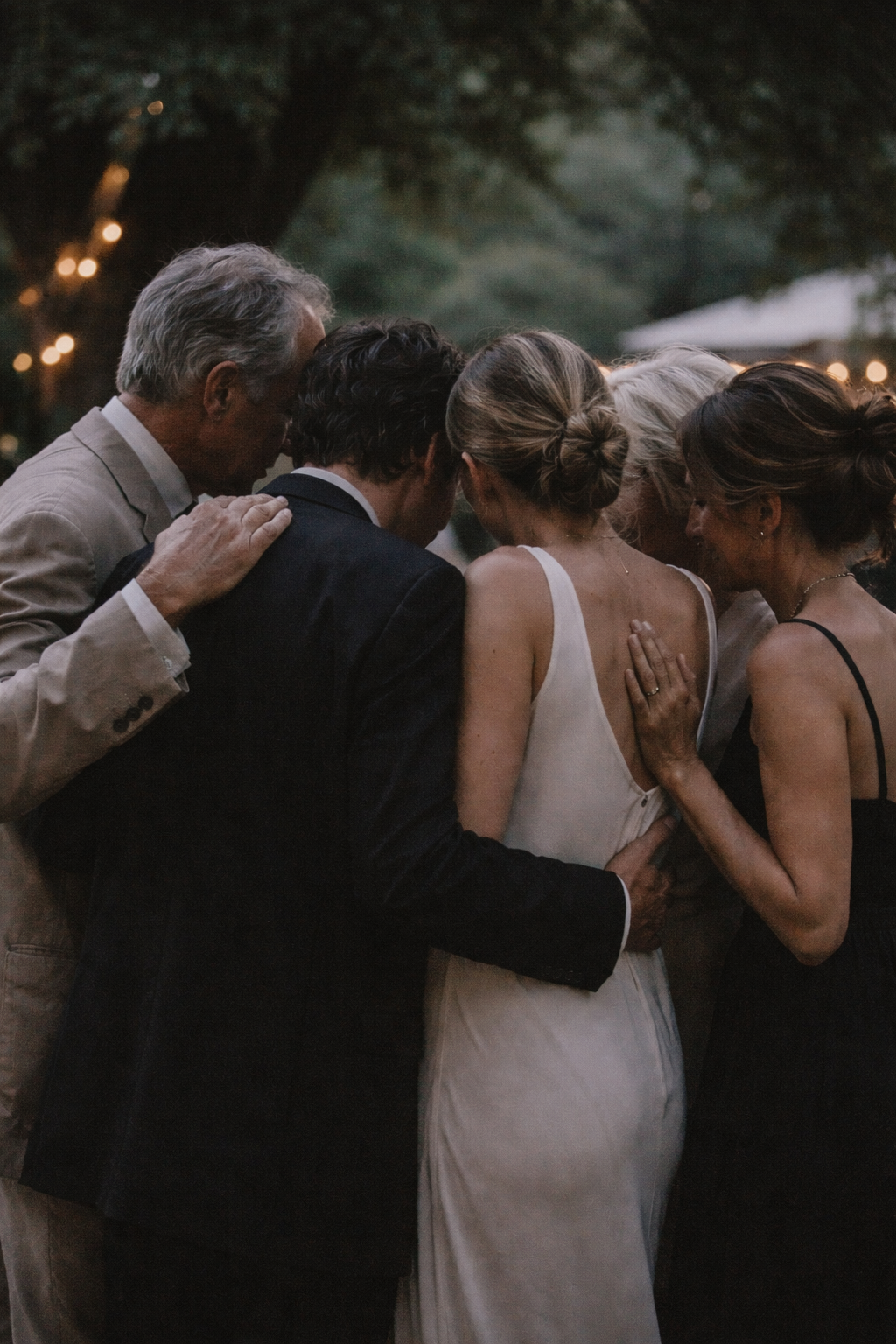
It requires people
who are not simply formal witnesses,
but a real part of the story being marked.
Reducing the number of guests, in this sense,
is not an aesthetic choice
nor a contemporary trend.
It is a way of returning the wedding
to a more precise dimension —
less dispersed,
more grounded,
more real.
It is not about inviting fewer people.
It is about inviting the right ones.
Because a wedding does not become more meaningful
as it expands.
It becomes more meaningful
as it concentrates.
When every presence carries weight,
a reason,
a relationship.
In the end,
what remains of a wedding
is not its size,
but the quality
of the people who were there.