



In contemporary weddings,
the day has become the centre of everything.
Not so much for what happens,
but for how it is constructed.
Every moment is planned,
organised, anticipated.
Every detail defined,
every sequence designed.
The wedding becomes an event —
something that needs to function,
to flow,
to hold together.
But a wedding is not only an event.
It is also a ritual.
The difference is less visible than it seems,
but it is decisive.
An event needs to work.
It requires precision, continuity,
a certain visual coherence.
A ritual serves another purpose.
It is not meant to simply succeed.
It is meant to signify.
When a wedding remains only an event,
what matters is the outcome.
When it retains a ritual dimension,
what matters is measure.
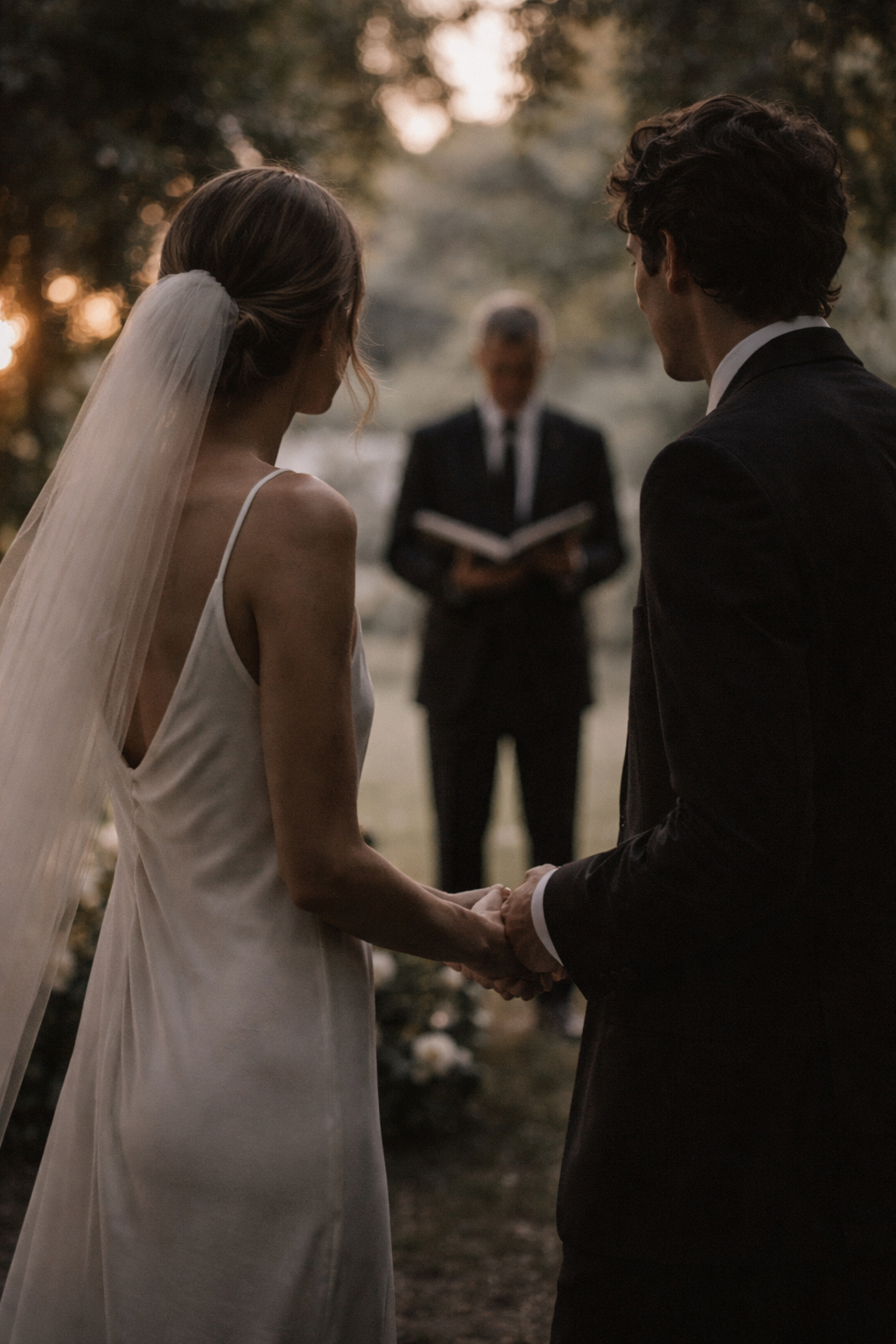
This is not about removing form or abandoning structure, but about preventing them from becoming autonomous — detached from the people who live them.
A wedding can be perfect.
But perfection, on its own, is not enough.
If it is standard, it disappears.
If it is precise, it remains.
Precision is not control.
It is alignment.
It means creating a day
that truly belongs
to those who live it.
Not larger than necessary.
Not more complex than necessary.
Not more visible than necessary.
It means choosing
what to include,
what to leave out,
what to make central.
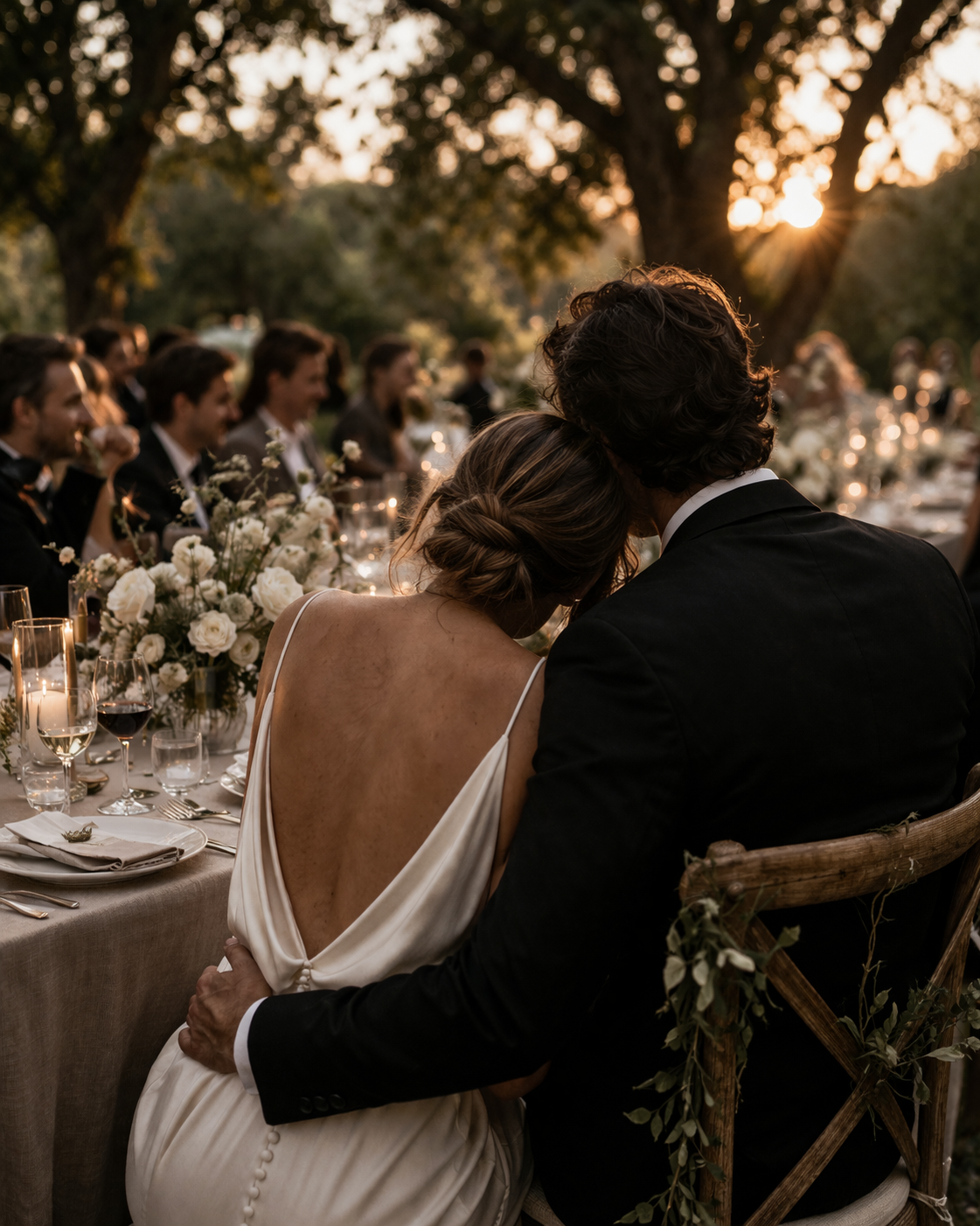
A wedding does not become meaningful
because it is flawless.
It becomes meaningful
when it is coherent.
When every element —
the place,
the people,
the time —
is not only correct,
but necessary.
In the end,
what remains is not how perfect it was,
but how right it felt.